A Place of Healing
Fall 2024
ARCH 602 | Iowa State University
Narrative Architecture: A Place for Healing
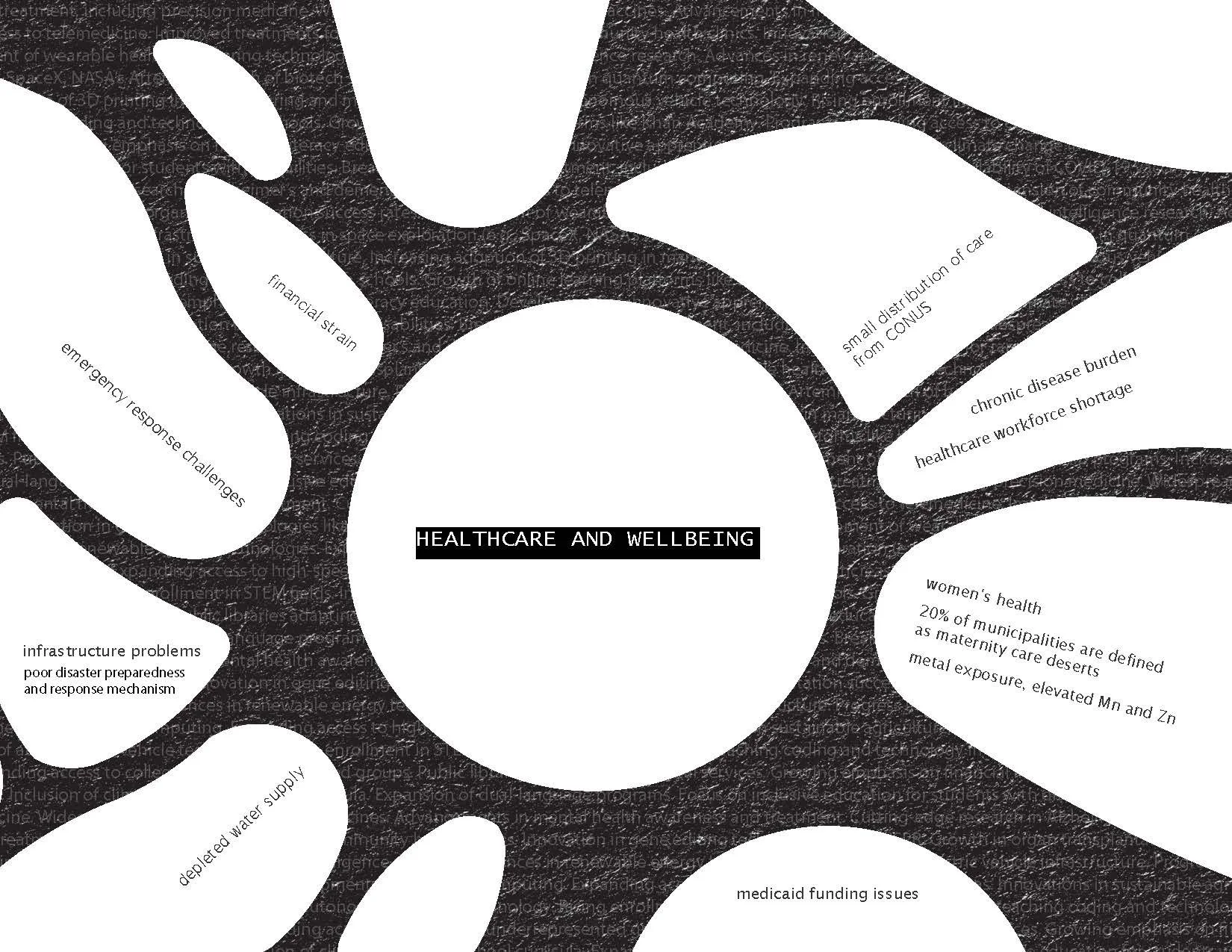
The land had long borne witness to histories written in blood and struggle. Once a site of colonial and military control, it stood as a silent sentinel of exploitation, its soil heavy with the memories of the oppressed. But change had come, carried on the voices of those who refused to forget. This was no longer a place of subjugation—it had become a sanctuary, a testament to resilience, sustainability, and cultural rebirth.
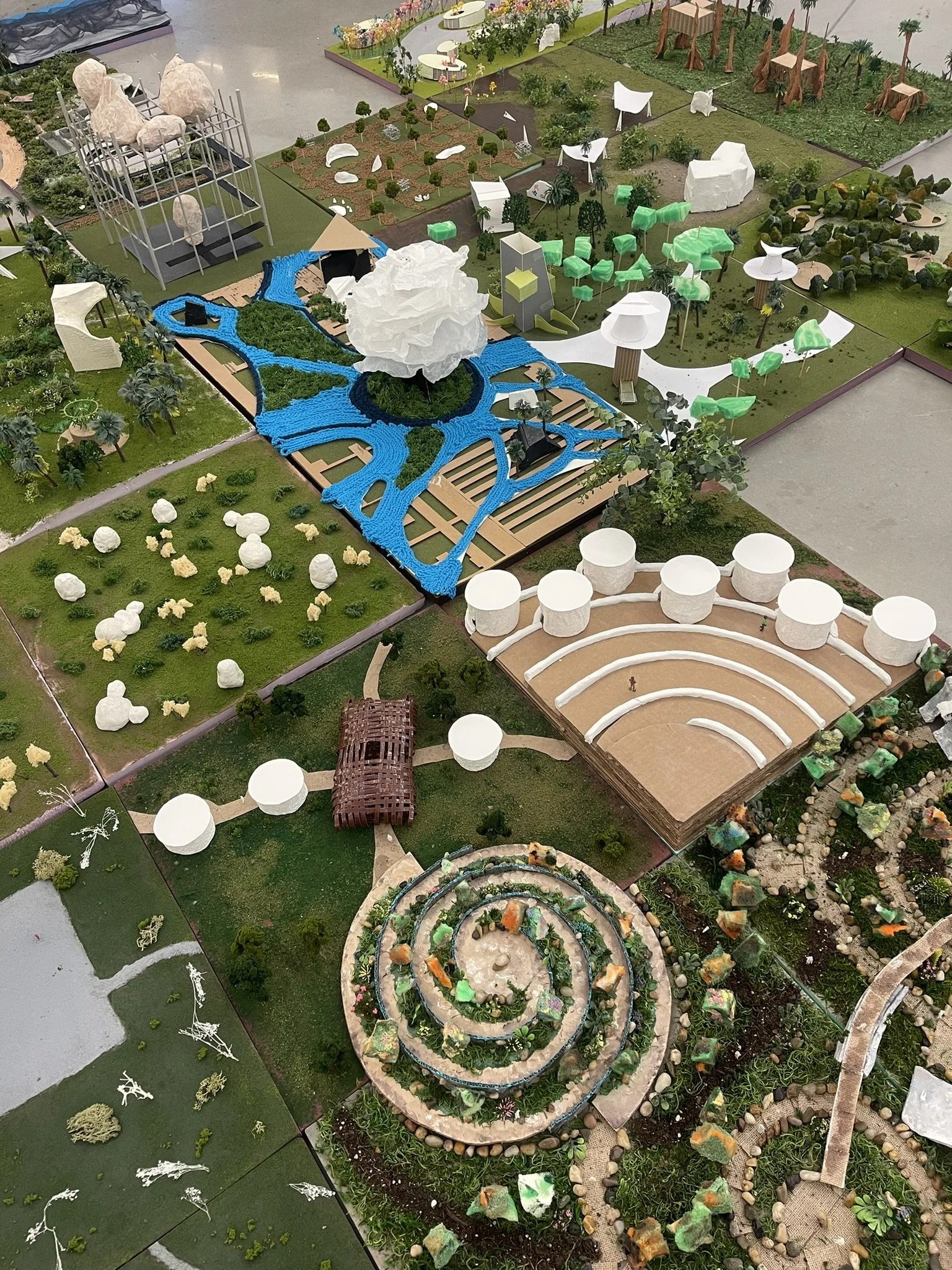
The transformation began with an act of defiance—a reclamation. Where the echoes of dominance once dictated the land’s fate, a new purpose now took root. The people returned, not as victims but as stewards. The architecture of the campus reflected this revival. Taíno cemís—sacred three-pointed stones—rose from the earth as structures of both reverence and function, their presence a declaration of survival. They did not merely mark the land; they healed it. These living cemís, designed as water filtration hubs, purified the island’s lifeblood, a direct response to the poisoned wells that had once sickened generations.
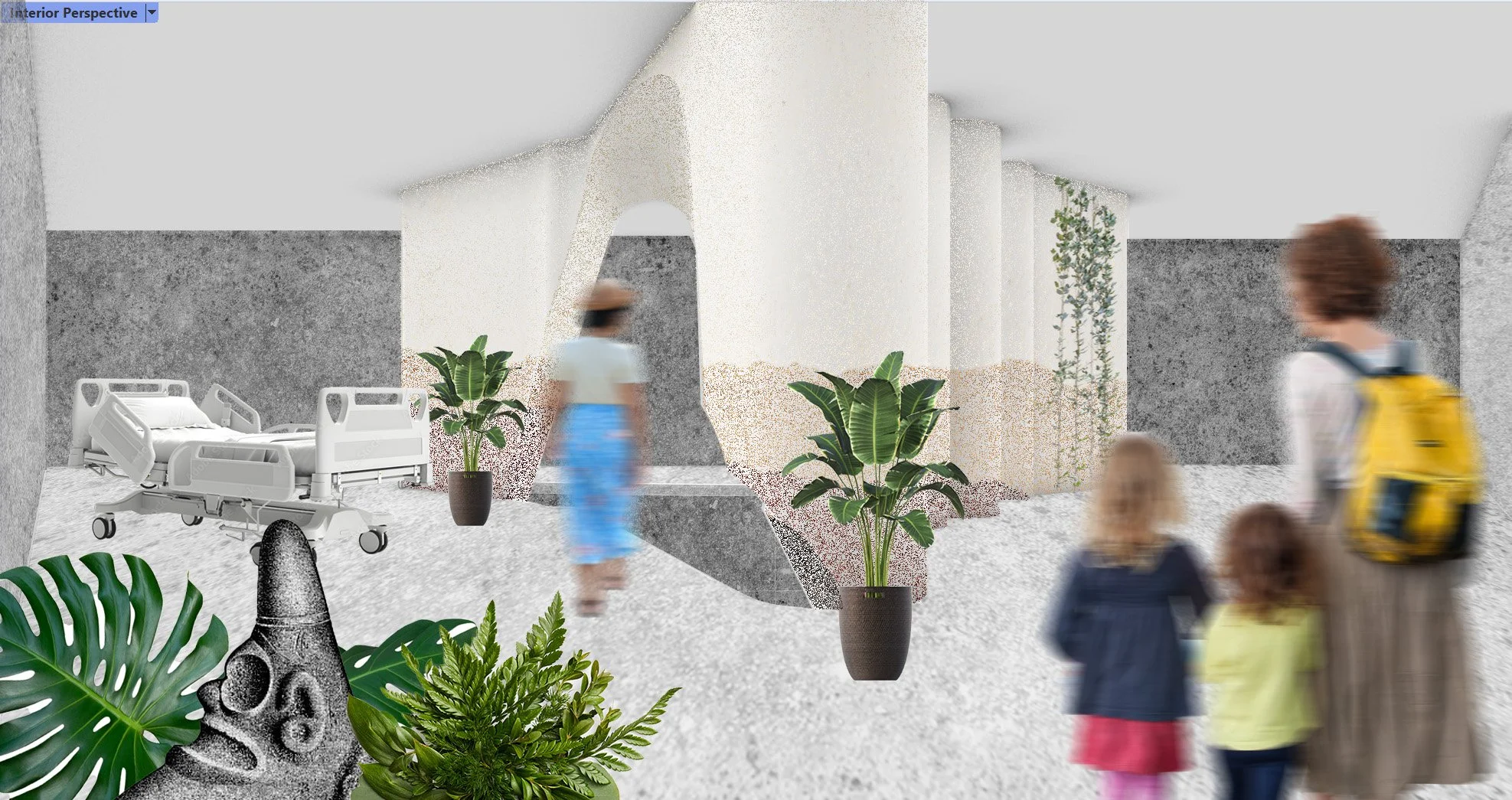
At the heart of the campus stood the Ceiba pentandra, the sacred tree of life. Its roots stretched deep, anchoring the space to histories untold, while its branches reached for the promise of renewal. The tree’s spirit infused the very fabric of the campus, mirrored in spaces dedicated to healing—maternal health centers, community wellness hubs, and places of quiet reflection. Expectant mothers, once abandoned by a broken system, now found solace under the ceiba’s vast canopy. Here, care was no longer a privilege—it was a birthright reclaimed.
The pathways of the campus wove stories of past and present. Inspired by intricate crochet patterns, they interlaced memory with aspiration. Each turn in the path unveiled a fragment of Puerto Rico’s colonial past and its enduring resistance. The ground beneath each footstep was more than just a surface; it was a living archive, telling stories through symbols and installations, reminding all who walked here that history was not just remembered—it was rewritten.
The architecture breathed. It listened to the whispers of the wind, absorbed the rhythm of rainfall, and responded to the needs of the people. The living cemís, sculptural yet functional, provided both physical and spiritual sustenance. They were more than structures; they were guardians, protecting the land while offering sanctuary. Through innovative biosystems, they filtered water, cleansed the soil, and provided nourishment to the body, standing as symbols of resistance against centuries of neglect. But the greatest transformation was not in the buildings or the pathways—it was in the people. Those once cast aside, the pregnant mothers, the displaced families, the forgotten elders, now had a space where their voices mattered. Their stories, long silenced, were now told in every brick, every tree, every drop of purified water. Health care was no longer a distant dream but an immediate reality. Water was no longer a commodity—it was a shared gift.
The campus was not just a collection of structures; it was a movement, a living testament to the power of reclamation. No longer mourning its past, the land now flourished with the promise of tomorrow. Under the shade of the ceiba tree, within the embrace of the living cemís, a new future was being written. And in this sacred place, healing began—not just for individuals, but for an entire community reclaiming its power.
-
![An image of the Float House.]()
01
-
![An image of The Float House.]()
02
-
![An image of the Float House.]()
03
-
![]()
04